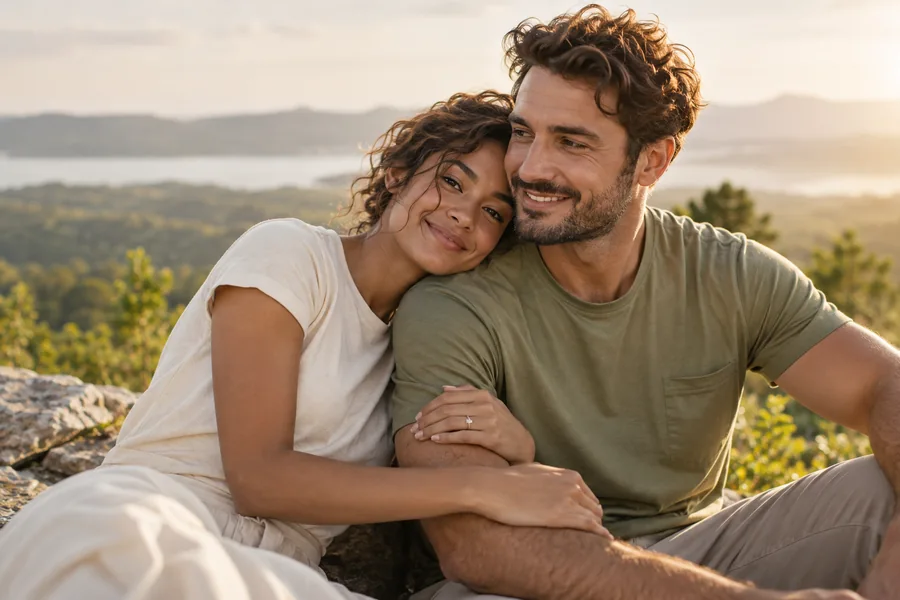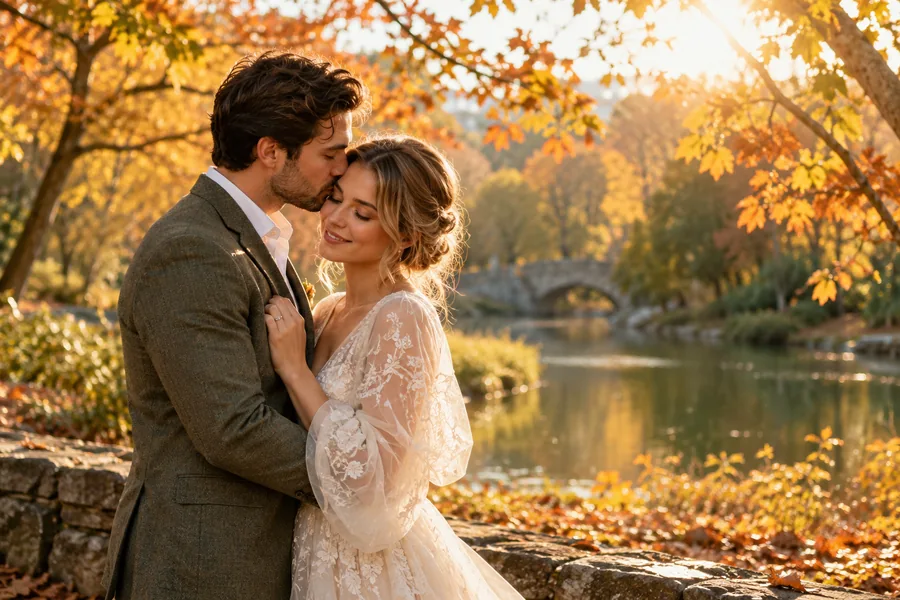
The best engagement photo outfit ideas begin with the location, season, and clothes you already enjoy wearing. Coordinate your level of formality and a few colors, then choose pieces that let you move naturally. A portrait session works better when your clothing supports the interaction rather than demanding constant adjustment.
Ask your photographer how long you will walk, whether changing space is available, and what the light is likely to be like. Those answers are more useful than a generic list of fashionable outfits. Plan for the session you have actually booked.
Build two looks around one mood
If the schedule allows two outfits, choose a clear reason for each. One might be polished and the other relaxed, or one may suit an urban location while the other works in a park. Avoid packing several nearly identical looks that consume time without adding variety.
Start with the person who has the more specific garment, then build the second outfit around its color and formality. A patterned dress might connect with a plain shirt in one of its quieter shades. You do not need to repeat every color or accessory.
Spring outfits for changeable conditions
Spring can suit soft layers, lighter trousers, midi dresses, and textured cardigans. Choose footwear for the path rather than the calendar. A garden may still be muddy, and a long hem can become wet before the first photographs are taken.
Try sage with cream, dusty blue with warm beige, or a muted floral beside a solid neutral. Bring an outer layer that looks intentional if the temperature drops. A jacket you are happy to photograph is more useful than one you keep removing while shivering.
Summer looks that stay comfortable
Choose fabrics and cuts you can comfortably wear in the expected conditions. A relaxed linen-blend shirt may pair with a cotton dress or light trousers. Check opacity in daylight and see how the clothes behave after sitting or walking.
Keep practical needs in mind: shade, water, comfortable shoes, and a place to pause. Discuss timing with your photographer rather than assuming a season guarantees flattering light. Strong sun, local weather, and the location’s orientation can change the experience.
Autumn combinations with texture
Knits, denim, soft tailoring, and longer skirts can work well against autumn scenery. Use rust, olive, cocoa, or muted blue as accents rather than trying to match every leaf. If the background is already colorful, a restrained outfit can give the photographs a calmer focal point.
Consider how texture connects the looks. A fine-knit sweater may sit comfortably beside a wool skirt, while a heavy hiking jacket may feel out of place next to delicate formal clothing. Match the visual weight as well as the color.
Winter outfits with real layers
Plan the coats first if you are photographing outdoors. A well-fitting coat, scarf, and suitable boots may be the main outfit for much of the session. Build colors underneath that still work if you move indoors or remove a layer briefly.
Protect comfort and safety instead of chasing a photograph in unsuitable clothing. Discuss shorter outdoor stretches, warm-up locations, or rescheduling when conditions are difficult. You can create winter atmosphere without exposing yourselves to weather you cannot comfortably manage.
Match the location’s visual language
For city streets, simple tailoring, clean shoes, and a restrained palette can complement architectural lines. In a meadow or garden, softer fabrics may move naturally with the setting. At the coast, consider wind and sand before choosing a long train or shoes that are hard to walk in.
Ask about location permissions and any rules that affect wardrobe changes or access. Do not assume a public-looking space permits every kind of session. Your photographer should clarify their own arrangements, while you confirm practical details that affect your arrival.
Keep personal style visible
An engagement session is not a requirement to become a different version of yourselves. If you never wear formal dresses or suits, a polished casual look may feel more convincing. Good fit and thoughtful coordination can make familiar clothing feel occasion-ready.
Our matching couple outfit guide offers ways to share a palette without wearing identical pieces. One partner can choose trousers and the other a skirt, or both can wear separates with different shapes. Agree on the connection rather than imposing a uniform.
Watch patterns, graphics, and reflective details
Small repeated patterns, large logos, and shiny surfaces can draw attention away from faces. Their effect depends on the camera, distance, and lighting, so ask your photographer for guidance. A favorite print is not automatically wrong; it simply needs to work with the other clothes and background.
Photograph the complete outfits together at home. View the picture at a small size to see what catches your eye first. If one accessory dominates, simplify it or repeat a quieter element elsewhere to balance the composition.
Prepare the clothes before the session
Try everything on together several days ahead. Check seams, buttons, hems, and underlayers. Steam or press garments according to their care labels, and transport them so they remain clean. Carry a lint roller and a small repair kit if you know how to use it.
Bring walking shoes when the location requires them, plus the portrait pair if different. Keep spare layers and essential items in one manageable bag. An overloaded collection of outfit choices can make a simple session feel like moving house.
Decide how the photographs will be used
If you want a save-the-date image, mention that to the photographer so there can be space for the layout. If the portraits will sit beside formal wedding stationery, consider whether a very casual graphic shirt fits the overall intention. This is a design choice rather than an etiquette rule.
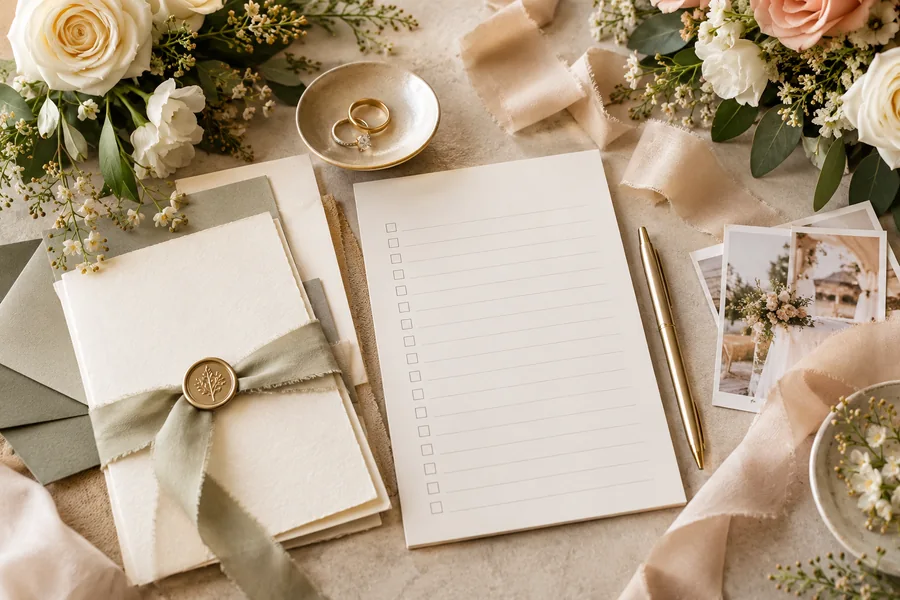
Our wedding planning checklist helps connect photo delivery with stationery deadlines. For inspiration on formal fabrics and shapes, the wedding dress guide also explains how clothing changes in motion.
Leave room for an ordinary good moment
Choose the outfits, test them, and then let the session become time together. Walk, talk, and follow the photographer’s direction without checking every crease. A comfortable outfit makes it easier to notice your partner instead of your sleeves.
The most useful final question is whether you both feel at ease. When the answer is yes, your preparation has done its job. Seasonal colors and thoughtful styling provide a setting; your connection gives the photographs their meaning.