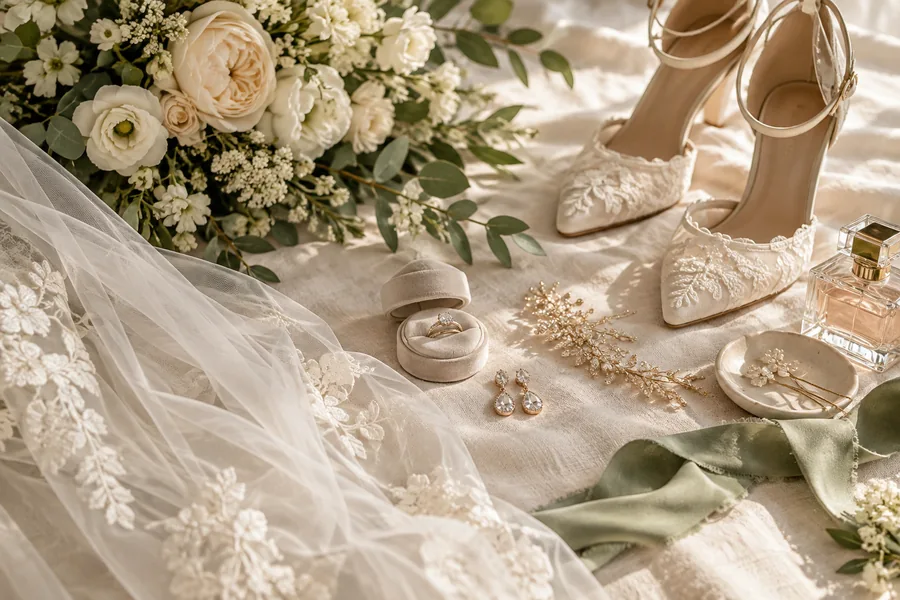
Choose bridal accessories after the dress, venue, and hairstyle have a clear direction. Start with practical shoes and any essential support pieces, then add one or two details that complement the outfit. A finished wedding look does not require a veil, a statement necklace, elaborate earrings, and a decorative bag all at once.
Accessories should help you feel comfortable and recognizable. They can honor a family connection, introduce texture, or give a simple dress a little more presence. Their value comes from how they work together, rather than how many separate pieces you collect.
Begin with the complete silhouette
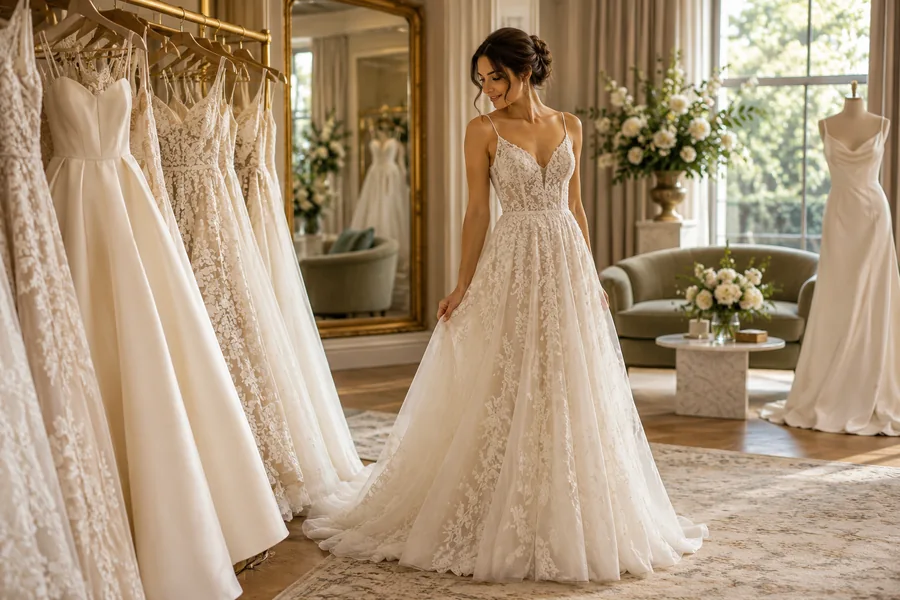
Look at the neckline, sleeves, waist detail, and skirt before shopping. An embellished bodice already provides visual interest, while a clean dress may leave more room for jewelry or a dramatic veil. Decide which feature you want people to notice first.
Take photographs of the dress from several angles, if the boutique permits it. Bring those references to accessory appointments. Our guide to choosing a wedding dress explains how fabric and movement shape the outfit; apply the same practical thinking to the finishing pieces.
Choose a veil for the setting
Veil length affects both appearance and movement. A short veil may be easier to manage in a compact venue, while a longer one can create a more formal outline. Ask how the veil attaches and whether the chosen hairstyle can support it comfortably.
Compare the veil against the actual dress fabric. Whites and ivories vary, and a slight difference may be more visible in daylight. You do not need a perfect match in every case, but make the comparison deliberately. Lace edging can echo a dress detail or compete with it, depending on scale.
If you plan to remove the veil after the ceremony, practice the process with the person helping you. Decide where it will be stored so it does not end up on a chair or mixed with catering items. A labeled garment bag can simplify that handover.
Put comfort first with shoes
Choose shoes for the surfaces you will cross and the time you expect to spend standing. Thin heels behave differently on grass, gravel, and polished floors. A block heel, flat, or supportive sandal can look polished while making movement easier.
Try shoes at home on a clean surface and notice pressure points. Wear the hosiery or inserts you intend to use. Bring the shoes to hem fittings because their height changes the dress length. If you plan a second pair, discuss the height difference with your tailor before the final hem.
A backup pair is only useful if it fits the outfit and your feet. Avoid buying an emergency option you have never worn. Pack blister care you already know how to use, and keep the shoes somewhere accessible rather than at the bottom of a distant suitcase.
Balance jewelry with the neckline
A high or detailed neckline may work well with earrings and no necklace. An open neckline can accommodate a pendant, a short strand, or a clean bare line. There are no strict requirements; compare options with the actual dress rather than following a diagram mechanically.
Test earrings for weight before the day. A pair that feels fine for five minutes may become distracting over several hours. Check clasps and backs, particularly for borrowed or sentimental pieces. If jewelry catches on lace, ask a specialist about a safer alternative instead of hoping it will behave differently later.
Make hair accessories part of the hair plan
Combs, pins, headbands, and bows need different kinds of support. Bring the chosen piece to a trial or discuss it with whoever is styling your hair. A heavy comb may not sit securely in the loose style you first imagined.
Think about photographs from the back and side as well as the front. A small cluster of pins can create a subtle detail without changing the whole look. If fresh flowers are involved, ask the florist and stylist how they will be prepared and attached. Avoid improvising with unfamiliar stems on the wedding morning.
Decide whether you need a bridal bag
A small bag can hold a phone, lip color, tissues, or another personal essential, but it should not become a prop you carry everywhere. Check that the closure is easy to use and that the chain or clasp will not snag the dress.
You may prefer to leave a clearly labeled pouch with a trusted person. Choose the arrangement that fits your day. Do not place medication or other items you may need quickly somewhere you cannot reach without interrupting the event.
Add layers for the actual weather
A wrap, jacket, or coat deserves the same attention as the dress if you will wear it for much of the celebration. Check sleeve room and closures over the outfit. A beautiful layer is less useful if you cannot move your arms comfortably.
For warm conditions, consider the weight of accessories against bare skin. For cooler settings, test whether jewelry catches on a knit wrap. Our wedding planning checklist can help put weather decisions and supplier deadlines in the same place.
Include sentimental pieces without pressure
A family item can be meaningful even if it does not suit the full outfit. You might wear it for the ceremony, include it in a detail photograph with permission, or carry it in a protected pouch. Explain your choice kindly if someone has offered a piece with strong expectations.
Before borrowing, agree on handling, storage, and return arrangements. Photograph the item’s condition and avoid cleaning or altering it without the owner’s consent. Sentimental value can exceed replacement cost, so choose a practical plan rather than relying on a vague promise to be careful.
Do one complete try-on
Put the dress, shoes, undergarments, jewelry, hair accessory, and any outer layer together. Walk, sit, and practice the movements you expect during the day. Look for snagging, slipping, unexpected noise, and pieces that need constant adjustment.
For a smaller outdoor celebration, our intimate wedding ideas can help connect the outfit with the setting. Once the combination feels comfortable and coherent, stop adding pieces. A thoughtful finishing touch should make the day easier to enjoy, not give you another detail to manage.